| Characteristic |
English
|
Spanish
|
||
|---|---|---|---|---|
| K N = 134 |
G1 N = 120 |
K N = 109 |
G1 N = 94 |
|
| Timepoint | ||||
| Fall 2024 | 2 (100%) | 2 (100%) | 1 (100%) | 0 (NA%) |
| Unknown | 132 | 118 | 108 | 94 |
| Administration Format | ||||
| Not applicable | 134 (100%) | 120 (100%) | 109 (100%) | 94 (100%) |
| Race | ||||
| American/Alaskan Native | 3 (2.2%) | 0 (0%) | 0 (0%) | 2 (2.1%) |
| Asian | 16 (12%) | 16 (13%) | 4 (3.7%) | 1 (1.1%) |
| Black/African American | 20 (15%) | 14 (12%) | ||
| Not reported | 16 (12%) | 33 (28%) | 61 (56%) | 63 (67%) |
| Other | 28 (21%) | 20 (17%) | 17 (16%) | 3 (3.2%) |
| White | 51 (38%) | 36 (30%) | 27 (25%) | 25 (27%) |
| Unknown | 0 | 1 | ||
| Ethnicity | ||||
| Hispanic/Latin(o/a) | 59 (44%) | 44 (37%) | 101 (94%) | 89 (95%) |
| Intentional nonreport | 3 (2.2%) | 2 (1.7%) | ||
| Not Hispanic/Latin(o/a) | 72 (54%) | 73 (61%) | 7 (6.5%) | 5 (5.3%) |
| Unknown | 0 | 1 | 1 | 0 |
| Gender | ||||
| Female | 78 (58%) | 52 (44%) | 62 (57%) | 47 (50%) |
| Male | 56 (42%) | 67 (56%) | 47 (43%) | 47 (50%) |
| Unknown | 0 | 1 | ||
| Home Language | ||||
| English | 100 (75%) | 86 (74%) | 21 (19%) | 15 (16%) |
| Spanish | 24 (18%) | 18 (15%) | 88 (81%) | 79 (84%) |
| Other | 9 (6.8%) | 13 (11%) | 0 (0%) | 0 (0%) |
| Unknown | 1 | 3 | ||
| English Proficiency Label | ||||
| (Re-)Classified Proficient | 12 (10%) | 10 (8.6%) | 19 (19%) | 23 (25%) |
| English Learner | 23 (20%) | 30 (26%) | 75 (77%) | 60 (65%) |
| English-only | 82 (70%) | 76 (66%) | 4 (4.1%) | 9 (9.8%) |
| Unknown | 17 | 4 | 11 | 2 |
| Ever IEP/504 | 7 (6.5%) | 10 (9.7%) | 8 (9.4%) | 8 (9.9%) |
| Unknown | 26 | 17 | 24 | 13 |
16 Narrative Story Production
16.1 Task Description
Children watch a short video. The video tells a story without any words. After, children are asked to tell everything that happened in the story. Then, they answer a conceptually related question.
16.2 Construct
The Narrative Story Production task evaluates the child’s understanding of a story structure and their ability to develop and verbally communicate a narrative.
16.3 Item Development
Five initial videos were proposed to assess children’s narrative production. The script blueprint for the animation of these videos were developed with the following considerations in mind: (1) each video had 5 or 6 events, structured around a description of a problem, a resolution attempt, and the actual resolution of the problem, (2) the story of the video had to include a clear emotional response, and (3) the characters and scenarios had to be familiar for the majority of the children in California. Four videos are currently available for selection: one involves building a sandcastle, another depicts packing up toys in preparation for a beach outing, a third shows a bear obtaining an ice cream cone, and the final video features a beach umbrella blowing away. The task is available in two formats: a bilingual version in which prompts are delivered in both Spanish and English, and an English-only version designed for monolingual English speakers.
16.4 Scoring
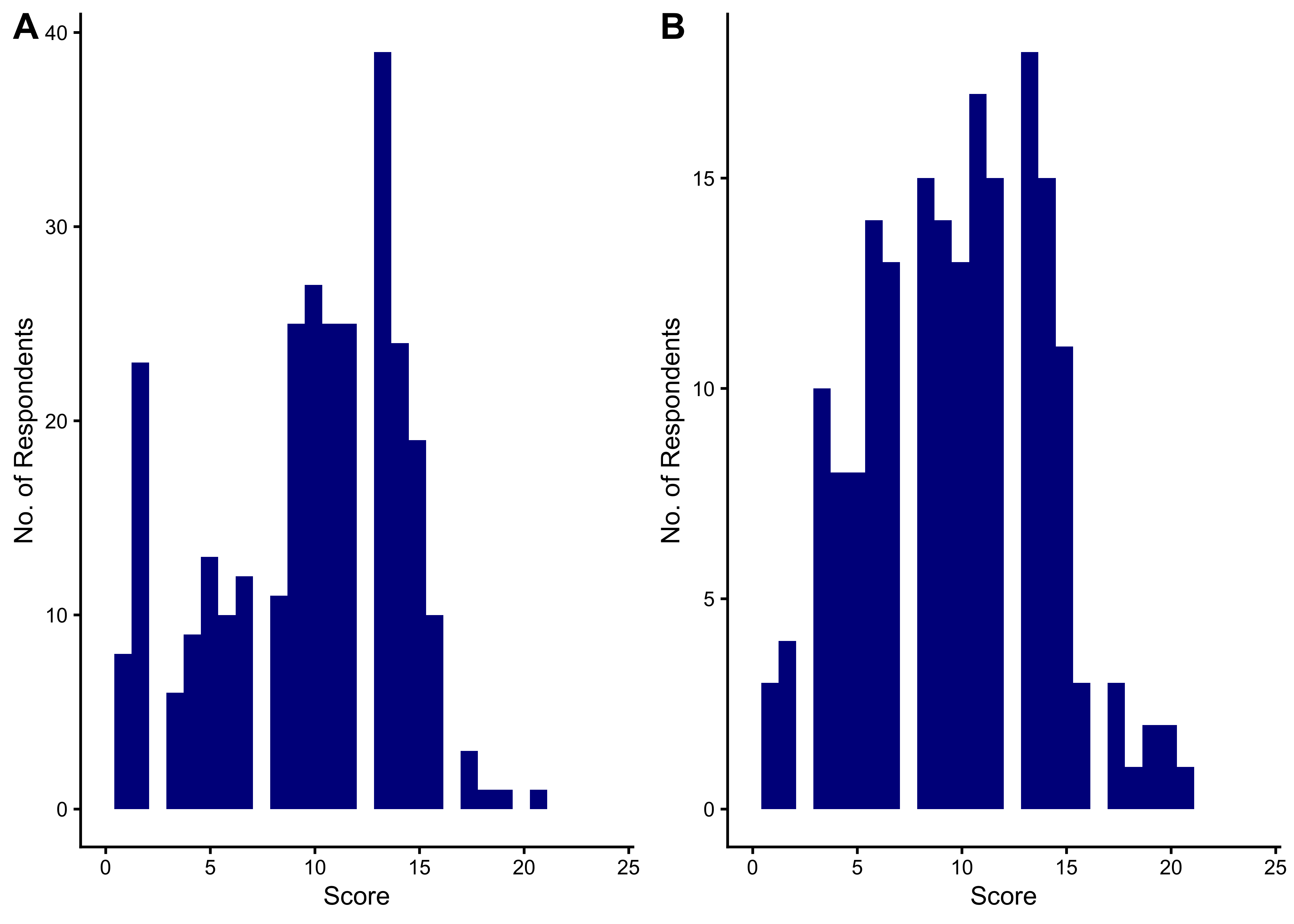
A complex scoring schema was developed focused on the macrostructure of the narrative. The scoring schema had three main sections: problem, solution, and a semantic question. The problem section consisted of naming the main problem and four possible types of supporting details, yielding a final score between 0 and 5. The solution section consisted of naming the main solution and four possible types of supporting details, yielding a final score between 0 and 5. Finally, the semantic question which involved a prompt such as, “name as many flavors of ice cream as you can.” A partial scoring model was used to capture variablity in the number of items children could name. This item was scored as incorrect if children provided an incorrect or off topic response (0), if the child provided 1-2 examples they achieved a score of (1), and if they named 2 or more items the response was scored a (2).
16.5 Samples
16.6 Score distribution
16.7 Criterion Validity Evidence
16.7.1 Sample
Forthcoming.